



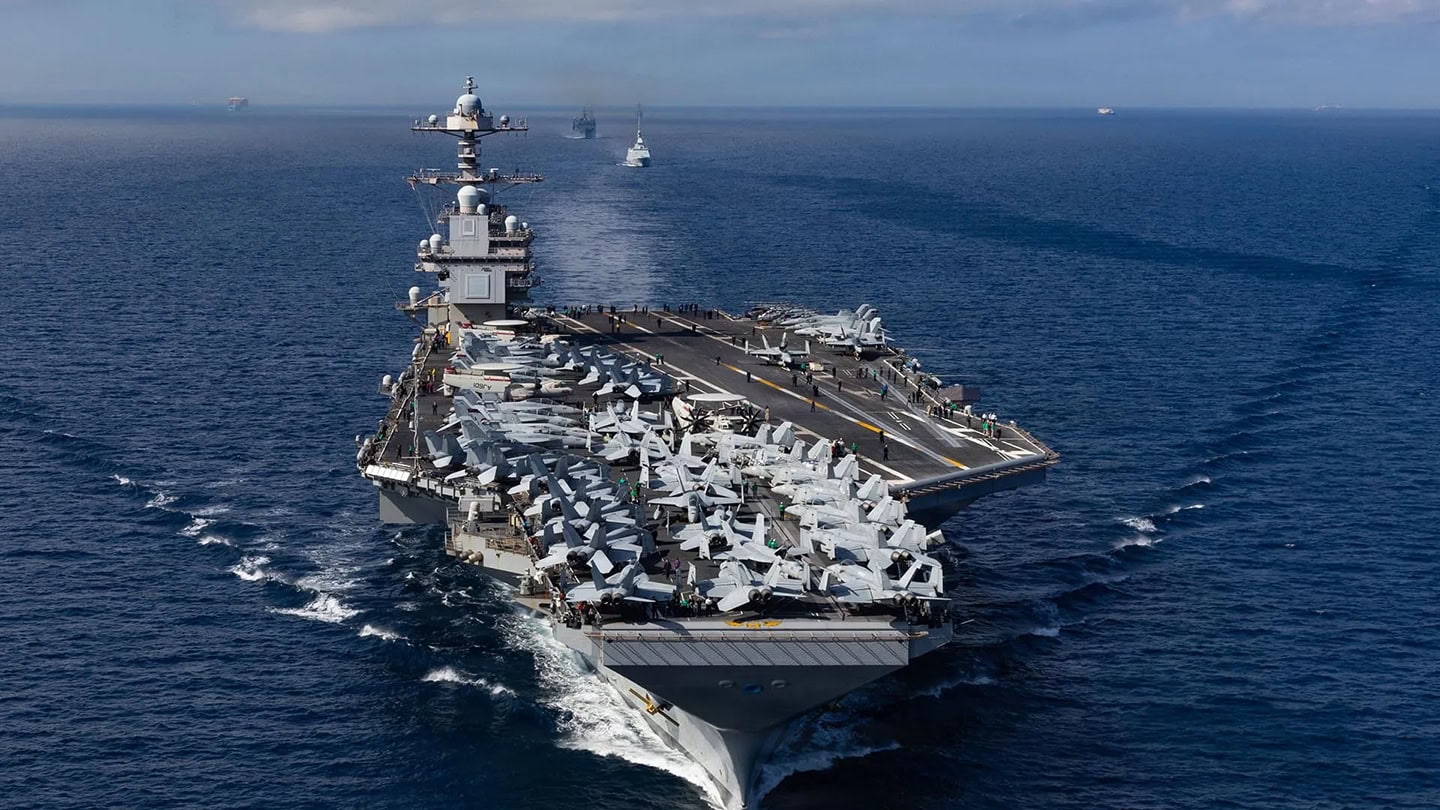
The United States government has expanded its military presence in the Caribbean Sea with the deployment of the USS Gerald Ford, the world’s largest aircraft carrier. The operation was ordered by President Donald Trump in October and is part of an anti-drug strategy that, according to the Pentagon, seeks to “strengthen the U.S. capacity to detect, monitor and disrupt illicit actors and activities that compromise the security and prosperity of the Homeland.” This information comes from teleSUR.
The incorporation of the USS Gerald Ford, a nuclear-powered ship capable of carrying more than 75 military aircraft, including F-18 Super Hornet fighter jets and E-2 Hawkeye early warning aircraft, has provoked criticism from several Latin American governments. They argue that the action represents a direct threat to the sovereignty of the region, declared a zone of peace a decade ago by the Community of Latin American and Caribbean States (CELAC).
Bombings and allegations of abuse
Although the Pentagon claims the operation’s objective is to combat drug trafficking, reports of bombings against vessels suspected of transporting drugs in the Caribbean and the Pacific have raised questions about the true nature of the mission. Reports indicate dozens of fatalities in recent military actions.
The operation, which covers Central America, South America, and the Caribbean, also includes the deployment of warships, a submarine, fighter jets, and U.S. troops, primarily in areas near the coast of Venezuela.
Pressures against the Maduro government
The military escalation is occurring alongside a political and economic campaign by Washington against the Venezuelan government. In addition to the military presence, the United States has offered cash rewards for information leading to the capture of President Nicolás Maduro, whom they accuse, without presenting evidence, of leading an alleged drug cartel.
Governments and analysts in the region believe that Trump’s hardening of policy is part of a strategy of destabilization and geopolitical control over Latin America and the Caribbean, especially at a time of growing cooperation between countries of the Global South.
Source: brasil247.com