



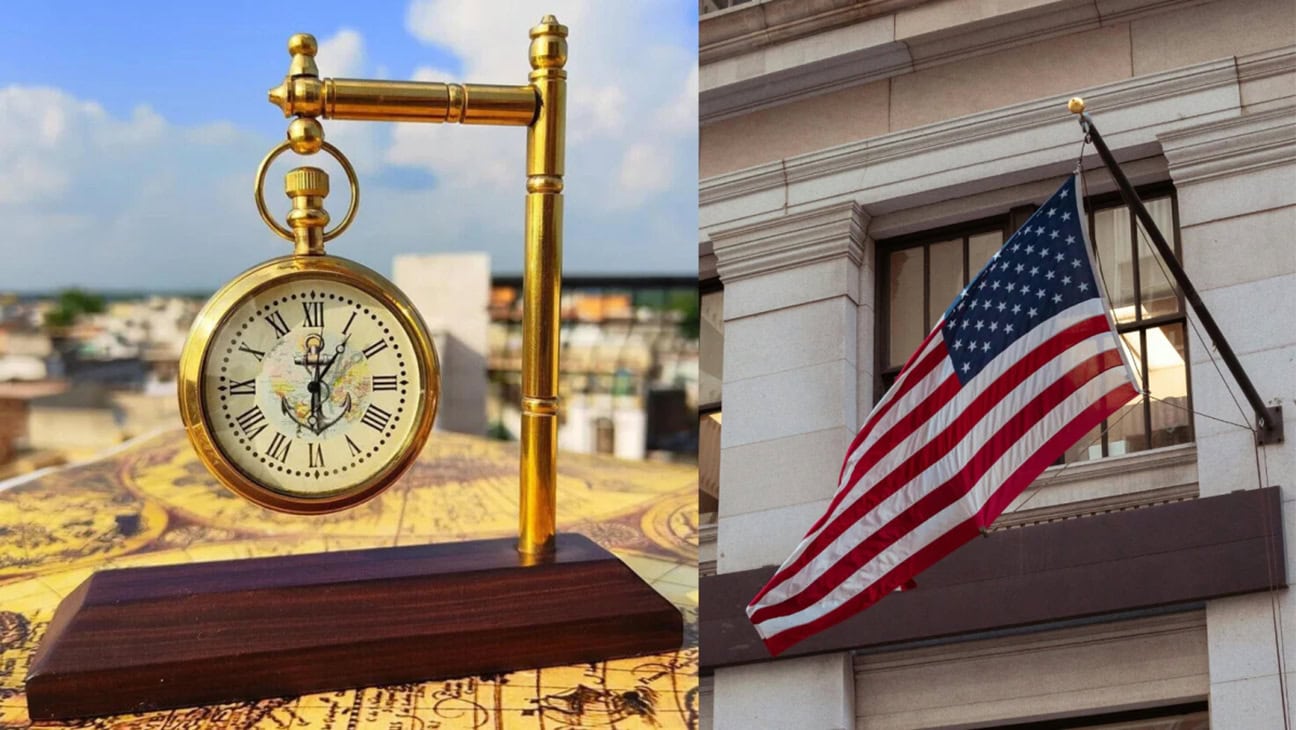
It’s almost time to change the clocks for “spring forward” in 2026.
Daylight saving time begins Sunday, March 8, when clocks move ahead one hour at 2 a.m.
You’ll lose an hour of sleep, but you’ll gain more evening daylight, with later sunsets and earlier sunrises.
On March 8, the sun will rise at 7:30 a.m. and set at 7:06 p.m. in New York City.
Daylight saving time will end on Nov. 1, 2026.
What is daylight saving time?
Daylight saving time (DST) is the annual clock change that moves clocks one hour ahead to add more daylight to the evening during the warmer months in the United States.
The idea dates to 1918, and the switch back to standard time restores more morning daylight.
DST is regulated by the U.S. Department of Transportation, with the National Institute of Standards and Technology (NIST) tracking the official rules and timekeeping.
Not everyone participates
Hawaii, American Samoa, Guam, Puerto Rico and the U.S. Virgin Islands don’t observe DST. Most of Arizona also opts out, except the Navajo Nation.
The Uniform Time Act of 1966 set consistent national transition dates for areas that observe DST and gave states the authority to decide whether to adopt it. Later amendments in 1986 and 2007 extended the DST period.