



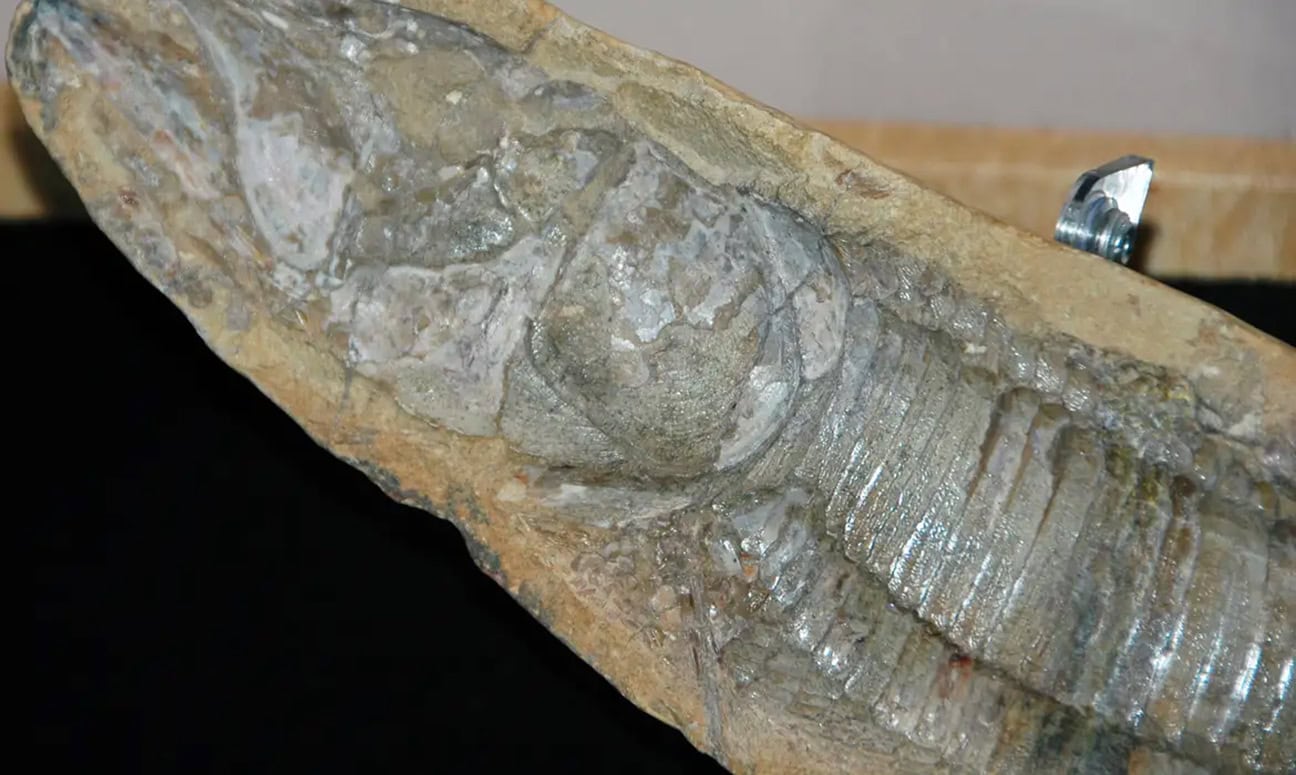
The Brazilian government, the Prosecution Service, and the country’s scientific community have been working to recover dinosaur fossils and other natural or cultural heritage items scattered across at least 14 countries.
Dubbed scientific colonialism, this practice is said to harm Brazilian science and museums. At least 20 restitution negotiations are underway with these countries, the Ministry of Foreign Relations reported.
Like the Foreign Ministry, prosecutors in Ceará state are working on the repatriation of fossils. According to them, the US tops the list of countries with the highest number of requests for the return of cultural heritage items, with eight cases pending – followed by Germany (four); the UK (three); Italy (two); and France, Switzerland, Ireland, Portugal, Uruguay, and Japan (one each). The two requests addressed to Spain and the other two sent to South Korea were rejected.
Last month, an agreement between Brazil and Germany promises to repatriate the Irritator challengeri dinosaur, of the spinosaurid family, to the Araripe region in Ceará. The animal, which could reach 14 meters in height, lived in the region about 116 million years ago. The specimen was illegally removed from Brazil and had been at the State Museum of Natural History in Stuttgart, Germany, since 1991.
Another initiative by the Foreign Ministry, in partnership with Brazilian researchers, also facilitated the return in 2024 of the Tupinambá cloak, worn by Brazilian indigenous peoples in the 17th century and previously held in Denmark. Additionally, in February this year, another 45 original fossils from the region were repatriated from Switzerland.
Illegal sales
The director of the Plácido Cidade Nuvens Museum of Paleontology, in Santana do Cariri city, where part of the Araripe region is located, Professor Allysson Pinheiro, told Agência Brasil that the number reported by the Foreign Ministry does not include the lawsuits filed by federal prosecutors.
“There are several other items currently being negotiated with Germany, and there are Brazilian cultural assets on nearly every continent. Negotiations are underway for repatriations in the US, France, Korea, Japan, and Italy,” he stated.
In Brazil, fossils are protected by a law passed in 1942 which stipulates that natural heritage items must not be privately owned, because they belong to the federal government.
There are exceptions for exporting fossils, which require authorization from Brazil’s Ministry of Science and Technology, and the recipient of the material must be affiliated with a Brazilian institution.
The Ubirajara case
The repatriation of Brazilian cultural heritage assets has gained momentum in recent years, particularly after the small dinosaur Ubirajara jubatus was returned to Brazil in 2023. The specimen is now part of the museum’s collection.
Aline Ghilard, a paleontologist and coordinator of the Dinosaur Laboratory at the Federal University of Rio Grande do Norte (UFRN), explains that ordinary people began pressuring the German museum as early as 2020, as the institution had been refusing to return the fossil.
“The museum issued a public statement saying there was nothing irregular about the situation and that the fossil belonged to Germany. The museum’s social media were flooded with comments from Brazilians. That was the turning point in the story,” she said.
Scientific colonialism
Aline Ghilard points out that the case damaged the German institution’s reputation and spurred the agreement to return the material.
“Most European museums are filled with artifacts from territories that were once colonies or that continue to be exploited today under a logic of power asymmetry. These countries feel entitled to come to our territories and collect materials,” she argued.
At least 490 fossils of macroinvertebrate species were illegally extracted from the Araripe region, according to a study published in Palaeontologia Electronica, which looks into research from 1955 to 2025. “Nearly half of all the publications analyzed [104 out of 218 – 47.7 percent] were written exclusively by foreign researchers, with no Brazilian co-authors,” noted Aline Ghilard, who participated in the study.
Another study identified 71 publications, released from 1990 and 2020, that contained analyses of macrofossils from the Araripe dating from the Cretaceous period, between 145 and 66 million years ago. “A large proportion [88%] of the fossils described in these publications were taken from Brazil to be deposited in foreign museum collections and have not yet been returned,” the Royal Society Open Science publication notes.
Some institutions return the fossils voluntarily as soon as they discover they were obtained through illegal sales – as was the case with the spider Cretapalpus vittari. The specimen was returned by the University of Kansas, in the US, in 2021. The animal lived more than 100 million years ago in the Araripe region.
Impact on science
The illegal export of these fossils has significant consequences for Brazilian science. In most cases, Brazilian researchers are unable to study these materials.
“When all these high-quality fossils are sent abroad, it is foreigners who make the major discoveries that bring scientific and academic prestige. Basically, they’re the only ones producing cutting-edge science because they’re in a self-perpetuating cycle of power,” notes Ghilard.
In her view, repatriating natural heritage breaks the cycle of power that favors wealthier countries. “It could even attract foreign investment, enabling us to compete on equal footing.”
Impact on museums
Allyson Pinheiro, director of the Plácido Cidade Nuvens Museum of Paleontology, said that the return of the Ubirajara fossil has significantly increased both visitor numbers and investment.
“[It] is part of the region’s identity and pride. It is really important to see children embracing these treasures. Dinosaur fossils are a huge draw for this audience and have truly captivated both children and adults,” said the professor from the biological diversity and natural resources program at Urca (Regional University of Cariri).
In 2006, UNESCO designated the Araripe as a global geopark – the first with this designation in Brazil. A UNESCO global geopark is a territory that houses sites and landscapes of international geological significance.
In February 2024, UNESCO included the Araripe Basin, where the Irritator and Ubirajara dinosaurs were found, as a candidate for inclusion on the list of World Heritage Sites designated by the United Nations (UN).
The region, covering approximately 972 thousand square kilometers, encompasses municipalities in the Brazilian states of Ceará, Piauí, and
Source: Agência Brasil