



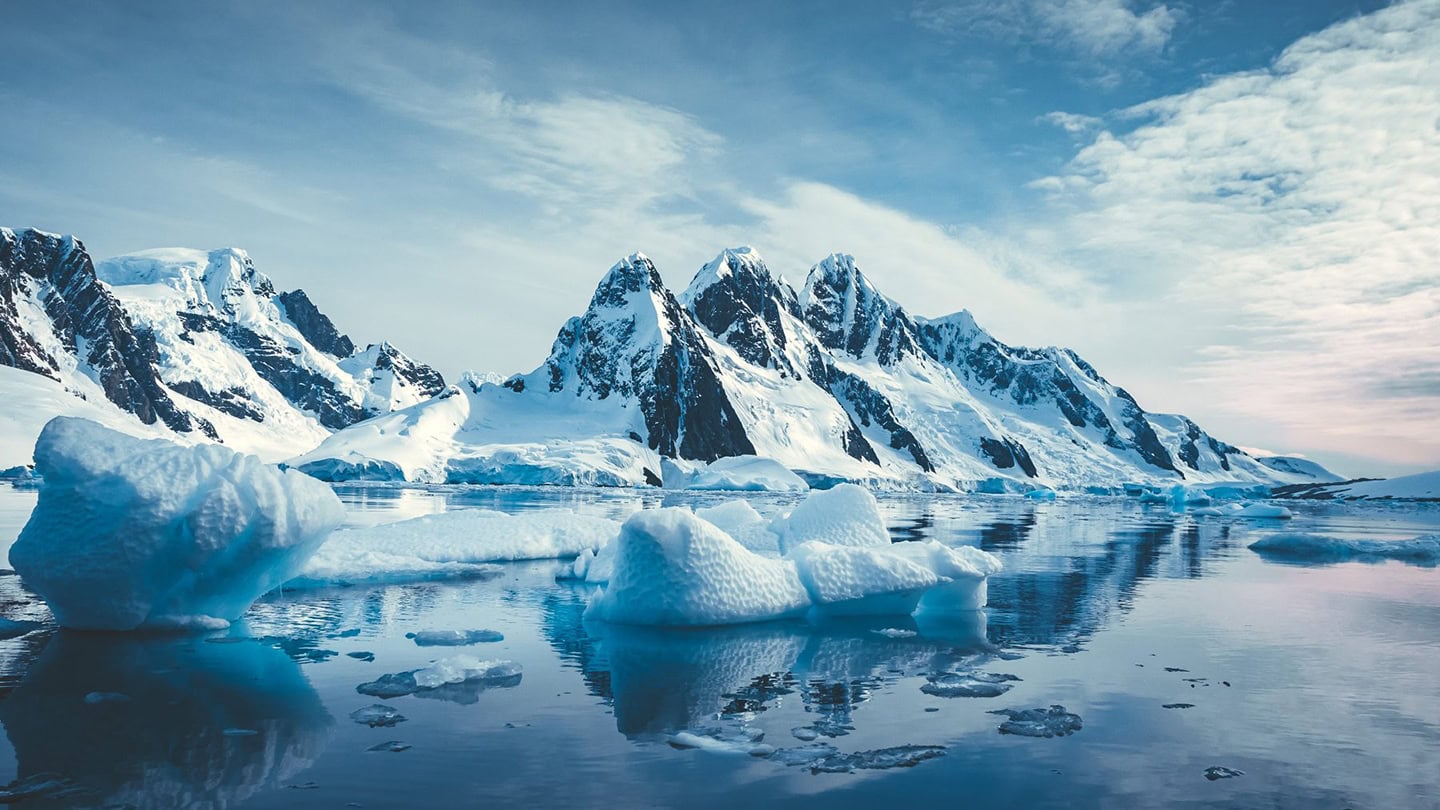
A study entitled Planeta em Degelo (“Thawing Planet”), based on new data from the Brazilian Antarctic Program (Proantar), warns of the acceleration of glacier melting, which has totaled 9,179 gigatons since 1976, threatening mainly coastal cities. Almost all (98%) of this amount has reached the oceans in liquid form since 1990, and 41 percent from 2015 to 2024 alone.
In an interview with Agência Brasil on Monday (Mar. 2), biologist Ronaldo Christofoletti, a professor at the Federal University of São Paulo (Unifesp), stated that extreme rain, intense heat, more frequent and extensive fires, and accelerated thawing are all symptoms of global warming – and this connection needs to be understood by society.
“They are all basically the same, just with different appearances. And they all reinforce that the dynamics of the planet are really changing,” said the scientist, who is part of the program’s communication project – ComAntar – and spoke to the reporter by phone from Antarctica.
Each gigaton corresponds to one trillion kilograms, which means that the total amount melted is equivalent to 18 thousand times the mass of the entire current world population.
Published on February 26, the study also states that, since 1976, the cumulative loss of glaciers is equivalent to about 9 thousand km³ of water – a volume similar to the one discharged by the Amazon river into the Atlantic ocean over 470 days.
Most of the melted volume came from Antarctica and Greenland, regions where the loss has reached 8 thousand gigatons since 2002.
This means that, in just over two decades, the loss observed in the polar ice caps has reached what glaciers around the world have lost in almost 50 years, signaling an even faster pace.
“The glaciers are turning into water. And this water will cause sea levels to rise. As a result, the sea will rise and reclaim a portion of the continents for this water to occupy. It’s a process,” the specialist pointed out.
The study is based on consolidated records from the World Glacier Monitoring Service (WGMS) and Proantar’s Carbmet Project.
Global warming
Christofoletti points out that the accelerated melting is linked to the record temperatures reported in recent years, with 2023, 2024, and 2025 among the hottest in history.
“We need to recognize that this is happening and adapt our cities so they can take care of their coastlines and coastal erosion, recognizing that there will be a loss of land area.”
Another problem caused by melting ice is the change in ocean salinity, as glacier water is fresh and further dilutes the salt concentration in seawater. This phenomenon weakens the ocean currents that carry cold water from Antarctica to the tropics and has an impact on the climate of the entire planet, said the researcher.
n the case of Brazil, the figures indicate that, despite the geographical distance, the polar regions play a prominent role in climate regulation. Changes in Antarctic ocean circulation influence the formation of deep water masses that distribute heat across the planet.
“These changes can have repercussions in the South Atlantic, affecting rainfall patterns, cold fronts, and extreme events in Brazil.”
Environmental education
To address this situation, Ronaldo Christofoletti argues that education is key. He cites the Brazilian government’s Blue Curriculum initiative, which incorporates ocean education into school curricula.
“We call it ocean culture, but it’s not about the ocean, it’s about understanding the planet we live on, 70 percent of which is ocean,” he said.
Education leads to behavioral change, Christofoletti argued. “People need to know what’s happening and understand this process and its relationship to their lives.”
The researcher also stressed the importance of complying with the agreements signed during the 2025 United Nations Climate Change Conference (COP30) in Belém to advance the energy transition and replace fuels that cause greenhouse gas emissions. This change is essential to minimize the problem of global warming.
Until this happens, however, he believes that more immediate measures are needed, such as adapting coastal cities.
During COP30, ComAntar released a document showing that the increase in disasters is closely related to cold fronts and cyclones. In the study, ComAntar researchers show that the frequency of disasters due to cold fronts and cyclones on the coast has increased 19-fold in the last 30 years.
Brazilian Antarctic Program
Proantar is spearheaded by the Brazilian Navy, the Ministry of Science, Technology, and Innovation, and the Ministry of Foreign Relations. The program is one of the longest-running in Brazil, with 44 years of uninterrupted operation.
Source: Agência Brasil