


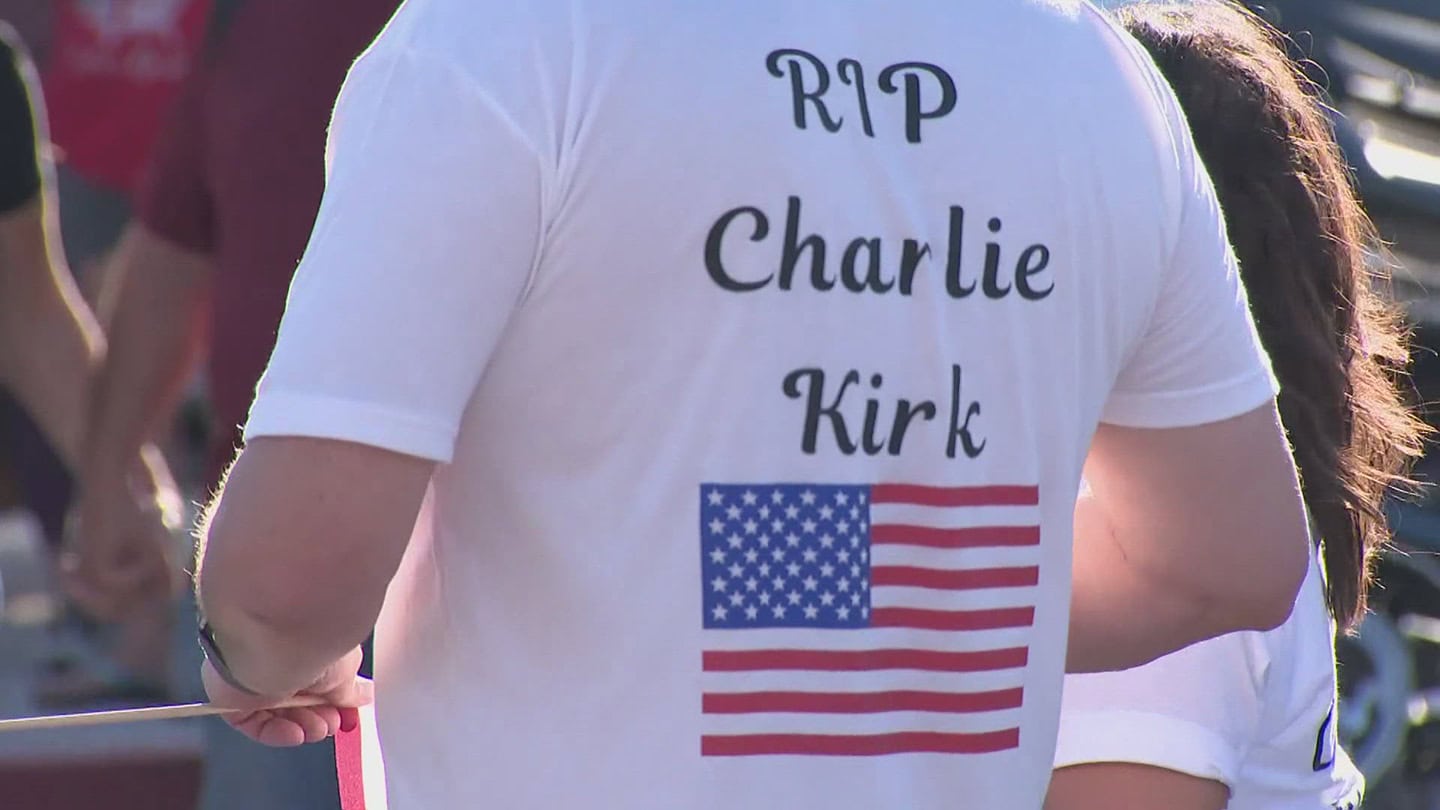
Political and partisan motivations are frequently used to justify hate crimes. Disagreements in political opinions and values only intensify these incidents. At this point, reflection transcends boundaries to the same extent that political emotions have already transcended boundaries.
- MURDER OF CHARLIE KIRK
The most recent example is Charlie Kirk, who was murdered on September 10, 2025, during one of his events at Utah Valley University in Utah. He was a conservative political activist in the United States, known for his support of and stance on Trump.
Kirk was on stage answering questions—as usual at his public events—when he was shot in the neck from a distance. Days later, it was confirmed that 22-year-old Tyler Robinson was responsible for the attack, and according to Utah authorities, the shooter’s family members helped with the investigation.
- ATTACK AGAINST JAIR BOLSONARO
Jair Bolsonaro, former president of the republic, was stabbed on September 6, 2018, during the campaign for the Brazilian presidential elections. The attack took place in the city of Juiz de Fora, Minas Gerais. The candidate was being carried by supporters through the crowd when Adélio Bispo de Oliveira managed to approach and stabbed him in the abdomen. The scene was widely recorded and broadcast live, generating great commotion and panic.
When questioned, Adélio stated that he had acted “at God’s command” and vehemently disagreed with Bolsonaro’s political views. Bolsonaro immediately underwent emergency surgery due to the severity of his injury and was removed from the campaign’s street demonstrations. The attacker was arrested on the spot. Subsequently, the Federal Court found Adélio unaccountable due to mental illness and ordered him committed to a maximum-security prison.
- MURDER OF JOHN F. KENNEDY
On November 22, 1963, US President John F. Kennedy was assassinated in Dallas, Texas, while riding in an open-top car. The event shocked the world and remains shrouded in controversy and political polarization to this day.
The initial official investigation, conducted by the Warren Commission, concluded that former Marine Lee Harvey Oswald acted alone when he fired from a window of the Texas School Book Depository. The alleged shooter was known for his pro-communist leanings and for having briefly lived in the Soviet Union, which, for many, indicated an ideological motivation in the polarization of the Cold War. However, Oswald denied shooting Kennedy, and his case never came to trial, as he himself was shot dead two days later by Jack Ruby, a nightclub owner with Mafia ties.
- MURDER OF MARIELLE FRANCO
Elected in 2016, the PSOL councilwoman in Rio de Janeiro was a Black woman, sociologist, and human rights activist. On March 14, 2018, Marielle had just participated in an event called “Young Black Women Moving Structures” in Lapa, downtown Rio de Janeiro, when she hailed a taxi. A few minutes later, a car pulled up alongside, and its occupants opened fire with a machine gun—a weapon restricted to the Federal Police.
Marielle was killed with four shots to the head. Investigations point to two former military police officers with ties to militias as the perpetrators: Ronnie Lessa (the shooter) and Élcio Queiroz (the driver of the car used in the attack). The crime is being treated as a political assassination, and investigations into those responsible are still ongoing, a matter that remains open to this day.
The murder resonated worldwide and became a symbol of the fight against political violence. International organizations, such as the UN and Amnesty International, have called for transparent investigations. It is considered one of the most striking political crimes in Brazil’s recent history, not only for its brutality, but for the impact it had on the discussion about democracy, security, and human rights.
EDUARDA DE NADAI GENERATO
Journalist