



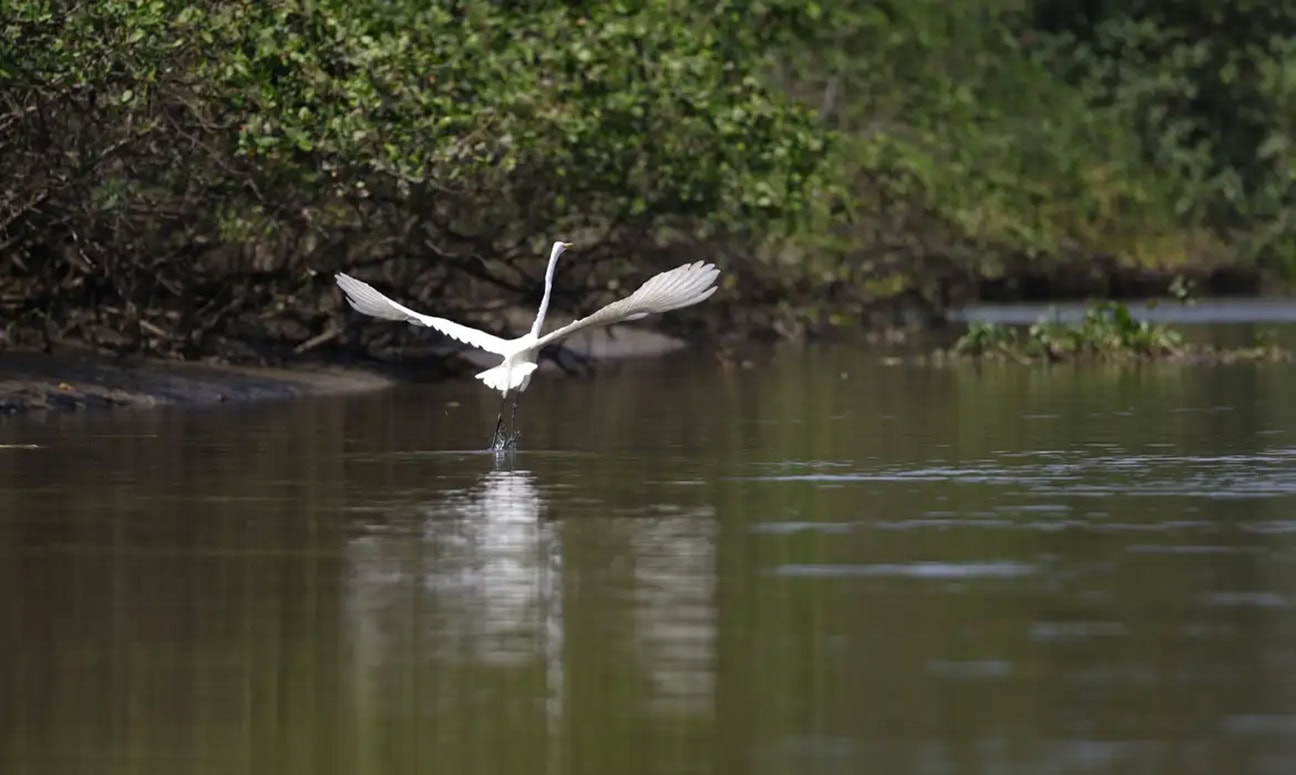
The Guapi-Mirim Environmental Protection Area, in the Rio de Janeiro metropolitan region, is once again home to species that had long disappeared. This area, which includes mangroves in Guanabara Bay, is now welcoming back birds, crabs, spiders, and butterflies as the ecosystem shows signs of regeneration after years of degradation.
This new scenario has been described and confirmed by those leading the Uçá Project, run by the NGO Guardians of the Sea in partnership with Petrobras through its Socioenvironmental Program. Since 2022, the project has worked to restore mangroves and monitor biodiversity, soil, and water in the Guapi-Mirim Environmental Protection Area (APA).
According to the organizers, the return of these animals indicates increased biodiversity and environmental rebalance. For the sailor crab, reforestation was crucial because they depend on trees for mobility. Butterflies have reappeared as the mangroves have expanded significantly, while spiders play an important role in controlling pests that canharm the ecosystem.
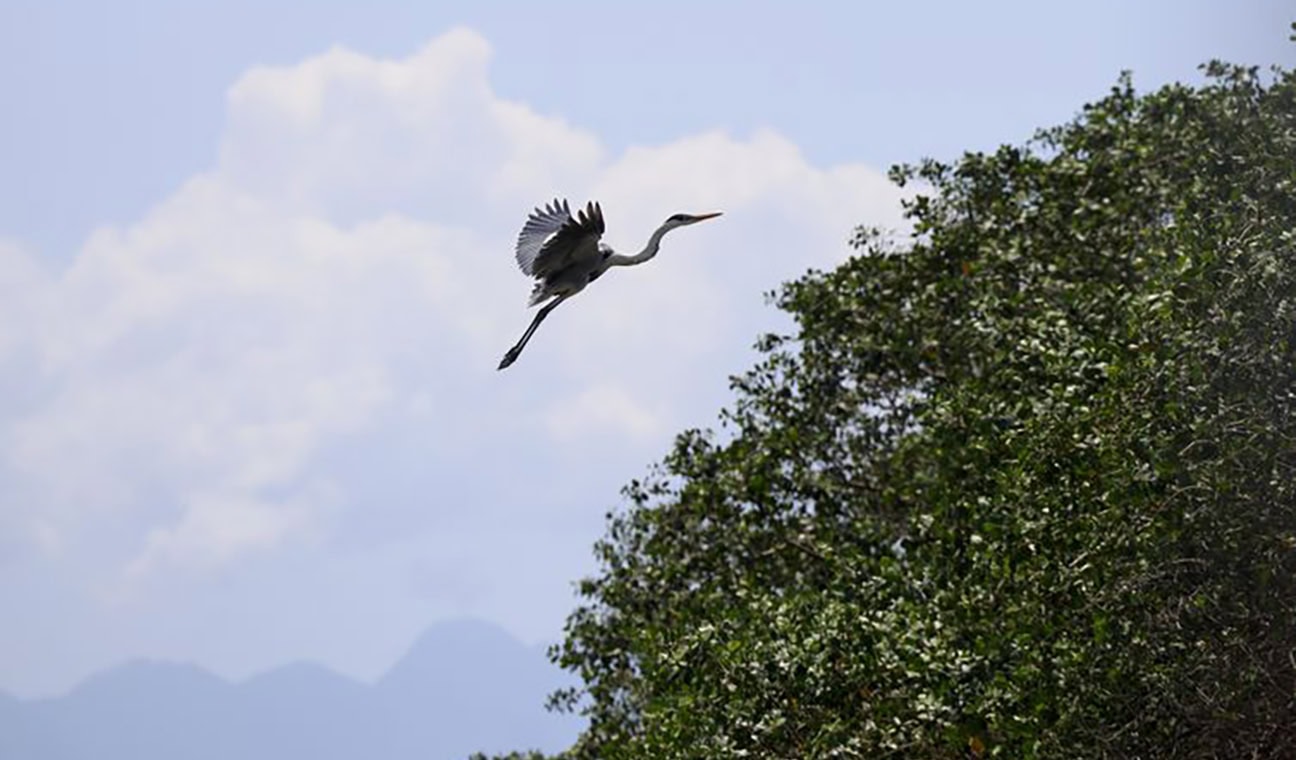
Other animals appearing more frequently include capybaras, anteaters, coatis, herons, and mangrove crabs.
To date, 62 species of birds, mammals, and crustaceans have been recorded in the reforested areas. Particularly noteworthy are those at the top of the food chain, such as the blue heron, the great white heron, and the crab-eating raccoon (Procyon cancrivorus), a mammal native to the Americas.
Reforestation began between 2015 and 2016. According to the Uçá Project, the trees have already reached a suitable height of 8–10 meters, indicating successful growth.
Bird monitoring
Bird monitoring by the Uçá Project is considered one of the technical pillars for assessing environmental recovery. Photographs and audio recordings are collected using apps such as Merlin and WikiAves, in addition to cameras with telephoto lenses for more precise species identification.
It is estimated that birds only returned after the mangrove vegetation reached a height of 3 meters or more. One example is the rare record of the mangrove finch (Conirostrum bicolor), a bird that lives in mangrove trees in small flocks or pairs. It is listed as an endangered species.
 The project also celebrates bird records such as the Banded Plover (Charadrius semipalmatus), a migratory species from the Northern Hemisphere; the Parakeet (Psittacara leucophthalmus); and the Carrapateiro (Milvago chimachima). The latter two are threatened by hunting and trafficking.
Traditional knowledge
The Uçá Project used restoration techniques based on local traditional knowledge. Instead of producing seedlings in a nursery, the project adopted transplantation – removing young seedlings from the mother plant and replanting them directly in the field. This approach reduced losses to less than 6 percent.
According to Pedro Belga, president of the NGO Guardians of the Sea, the project also promotes local economic development. One example is the harvesting of crabs, which is the basis of livelihood for many families.
“The true success of restoration depends on the participation of traditional communities and the empowerment of those living in impacted areas. They are the greatest defenders of the territory,” said Belga.
Source: Agência Brasil