



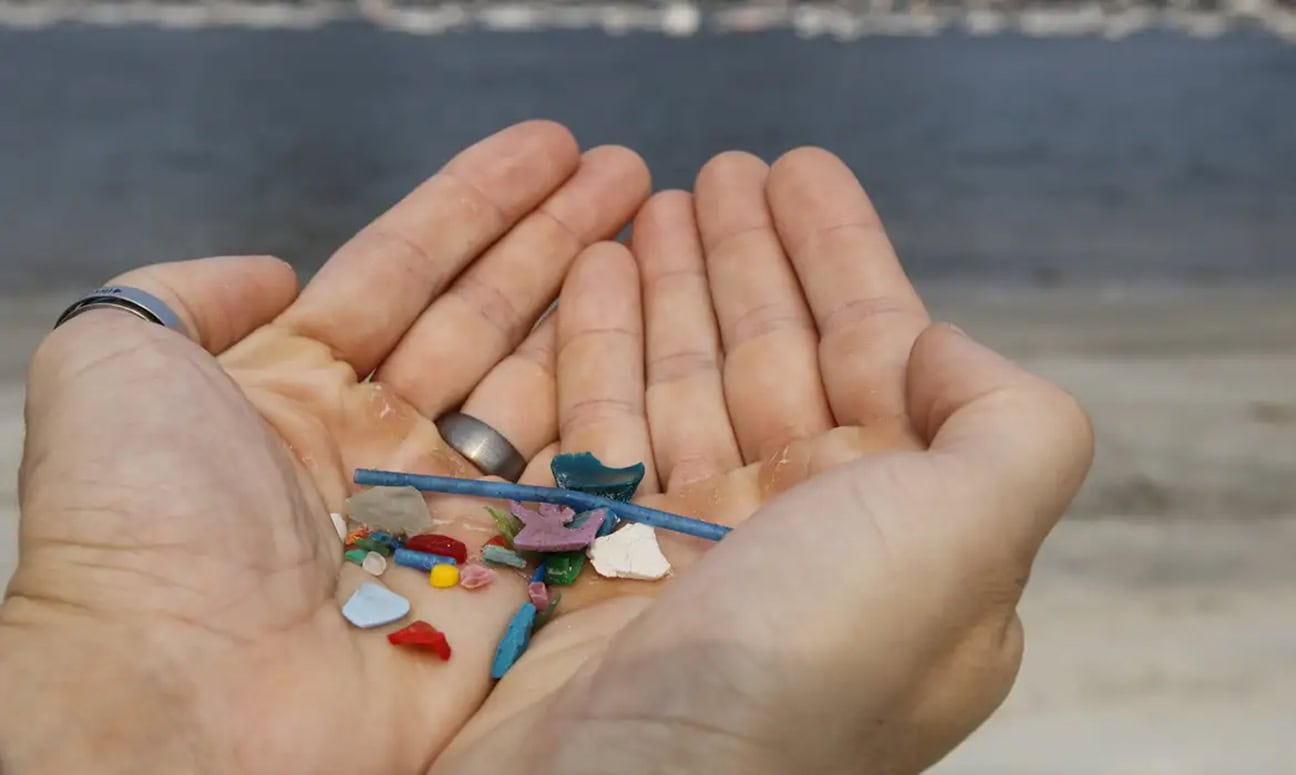
The Brazilian Academy of Sciences (ABC) on Thursday (Aug. 14) is launching the report entitled Microplásticos: um problema complexo e urgente (“Microplastics: a Complex and Urgent Problem”). The document looks at the effects of improper disposal of plastic and proposes strategies to combat the tiny fragments that contaminate the environment, especially rivers and oceans.
According to the bibliographical survey, Brazil accounts for up to 190 thousand tons of the total volume of waste in the marine environment every year. The estimated production of plastic in the world stands at 400 million tons a year, of which less than 10 percent is recycled.
Around 80 percent of the world’s plastic waste reaching the sea comes from activities on land – such as tourism, industry, disorderly urban occupation, and poor solid waste management. The other 20 comes from activities carried out at sea – such as maritime transportation and fishing.
“Tackling microplastic pollution requires coordinated action between the government, the productive sector, the scientific community, and society. We need to review national strategies and invest in education, innovation, and regulation to protect human health and ecosystems,” said Helena Nader, the academy’s president.
Once it reaches the ocean, waste is dispersed by tides, currents, and winds, bringing a range of environmental, social, and economic impacts. It can be ingested by marine animals and other living beings in the marine food chain.
Microplastics are also found in organs of the human body, which poses health risks. Studies have found microplastics in the placentas and umbilical cords of pregnant women.
“We can no longer treat plastics as disposable. It’s time to take responsibility for the complete cycle of these materials, from production to disposal and recycling,” said Adalberto Luis Val, the academy’s vice-president for North Brazil and coordinator of the working group on microplastics.
Strategies
To reduce the impact of this type of pollution, the researchers have proposed six approaches:
• Governance – to revise the 2019 national plan to combat litter at sea, strengthening the fight against microplastics; and to strengthen the discussion and implementation of the treaty on environmental pollution by plastics.
• Science, technology, and innovation – to increase investments in recycling in Brazil; to reuse plastic products; and to replace synthetic polymers with biodegradable polymers in disposable products.
• Fostering and financing – to create health risk assessment mechanisms and other initiatives to mitigate the effects of plastic pollution, such as using nanotechnology to boost reuse.
• Training – to train waste pickers, formalize their work, and train primary and secondary school teachers.
• Plastic cycle – to seek changes in legislation on the proper disposal and collection of plastic materials.
• Environmental education and communication – to devise a government policy to encourage environmental education, especially for factory workers and entrepreneurs, as well as for agribusiness; and to create a campaign on plastic disposal and recycling.
Source: Agência Brasil