



At a small, industrial roastery in Washington, D.C., the nutty, inviting smell of roasting coffee hangs heavy in the air. It’s where Lost Sock Roasters, a local company, roasts and packages its coffee beans.
After nearly a decade of running the company, Jeff Yerxa says the strong coffee aroma barely registers. “I can’t even smell it anymore,” he says with a laugh.
But something else is grabbing his attention these days: tariffs.
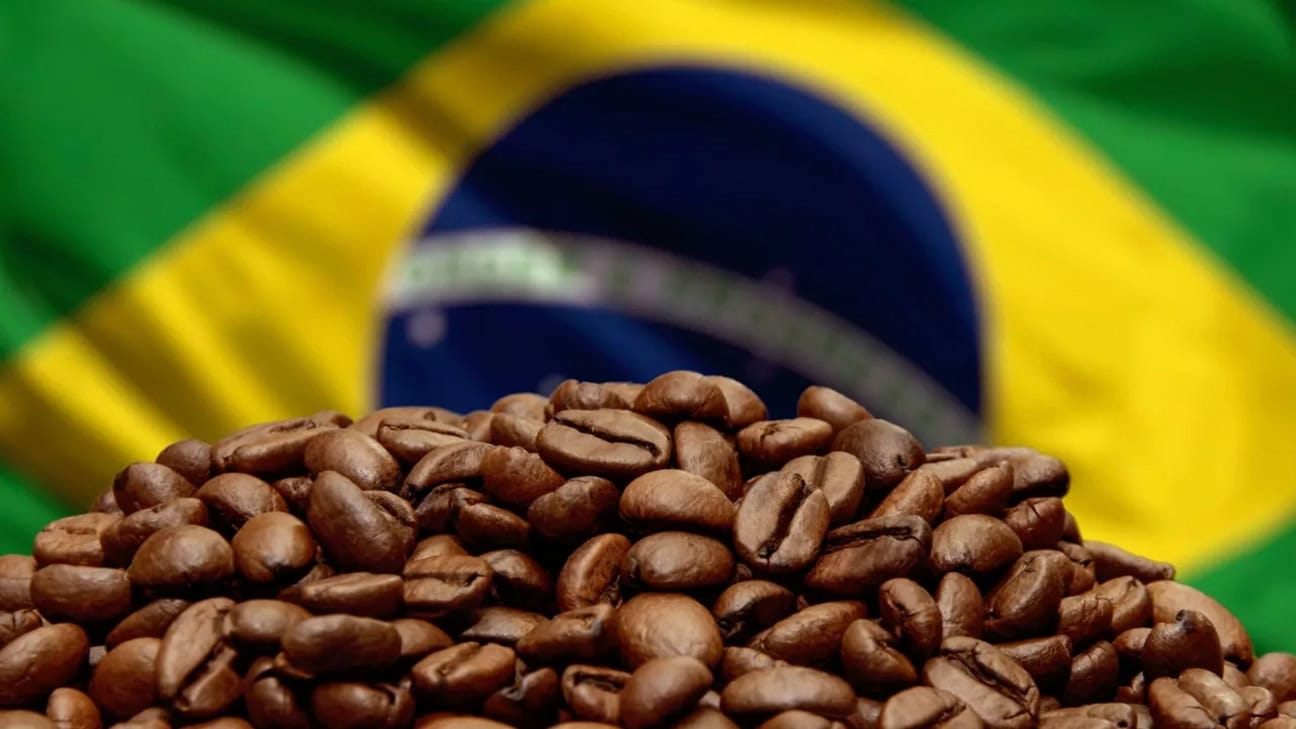
President Trump announced plans to levy a 50% tariff on all goods from Brazil – the world’s largest coffee producer and the source of about 30% of U.S. coffee imports. This looming tariff threat has sent shock waves through the U.S. coffee industry, raising fears especially among small roasters like Lost Sock.
“When people go to their local coffee shop, whether it’s Starbucks or something else, by and large they will likely be buying some form of Brazilian coffee,” says Monica de Bolle, from Peterson Institute for International Economics. “A 50% tariff will kill that market.”
Yerxa says he is trying not to react until he knows details are final, but he says profit margins are already thin. “It’s the uncertainty that’s probably the worst.”
“At the end of the day, the consumer is the one that’s going to bear the brunt of it,” he says. “I don’t want to raise prices, but we’re seeing increased costs of 30% on coffee, potentially.”
Trump’s messaging rings hollow for business owners
The Trump administration defends its trade policy and the dozens of tariffs on a number of countries as necessary to protect American jobs, to renegotiate trade deals and to reduce the trade deficit.
For roasters like Yerxa and Colby Barr, CEO of Verve Coffee Roasters much of the administration’s reasoning falls flat. The U.S., aside from small coffee farms in Hawaii and California, doesn’t produce coffee at the scale that Americans consume it.
“It’s a tax on Americans’ mornings,” Barr says.
The past several years have been volatile for the coffee industry, contributing to a major increase in market prices for coffee even in the last year, Barr says. The price volatility can be attributed, in part, to the COVID-19 pandemic and back-to-back low-yield coffee harvests in Brazil in the last year, Yerxa says. Those weak harvests, in turn, are due to drought and high temperatures and more generally climate change, which has negatively impacted coffee harvests for several years.
Why customers will pay more
So much coffee in the United States comes from Brazil because of the country’s large-scale production capacity, low costs, favorable climate and flavor profile, Yerxa and de Bolle say.
“Most of the industry relies on those coffees to be the backbone of their blends,” Yerxa says, referring to the mixture of beans from different regions.
Lost Sock, the D.C. coffee company, is best known for single-origin, higher-end coffees sourced from nearly a dozen countries each year. But it uses Brazilian beans for some of its blends – products that stem from its long-standing relationships with two cooperatives in Brazil.
Getting those beans from Brazil to D.C. is a long process that involves international partners, contracts negotiated months to years in advance, and plenty of other planning. Lost Sock coordinates with producers and exporters, and it places orders with them for specific amounts of specific beans from specific Brazilian farms, exports the coffee, and stores it in a U.S. warehouse.
The importer adds a margin for logistics, and Yerxa then factors that final price per pound into Lost Sock’s wholesale and retail pricing.
And where would the tariffs come in?
That is initially something that the importer would have to pay once it brings beans into the U.S., he says. “That tariff would just be another line item on the receipt that we’re getting when we release that coffee. And then for us, we take that coffee price, and again it’s added on to the price per pound of that coffee, when we come up with the pricing for wholesale and for retail.”
De Bolle explains that if tariffs hit on Aug. 1, it could be a few months before customers feel price increases at cafes or restaurants. That’s because those businesses generally buy in bulk and have a stock of coffee that could last them a while – stockpiles like this could last a few months, she says. People who buy their coffee beans at the grocery store could feel the tariff impacts more quickly.
“For people who don’t stock up, so the regular consumer who’s going to the supermarket… and getting their coffee, maybe those price increases will be felt sooner,” de Bolle says, adding that coffee is perishable and stocking up on beans can get a business, or consumer, only so far.
The ripple effects
Long term, if it looks like these tariffs stick, Lost Sock may have to consider pivoting away from using Brazilian coffees in some blends, Yerxa says. Walking away from longtime partnerships in Brazil really isn’t an option for him, however.
But if Brazil’s coffee prices go up, coffee roasters will rush to buy from other sources, Barr of Verve Coffee warns. And these other coffee-producing countries, such as Vietnam, are also facing tariffs.
“It’s really, really difficult, and more like impossible, to really prepare for it,” Barr says. “Tariffs don’t help the coffee producer. They don’t help the small- and medium-sized businesses across the country, and they don’t help the consumer. Why are we doing it?”
Source: npr.org by Jaclyn Diaz