



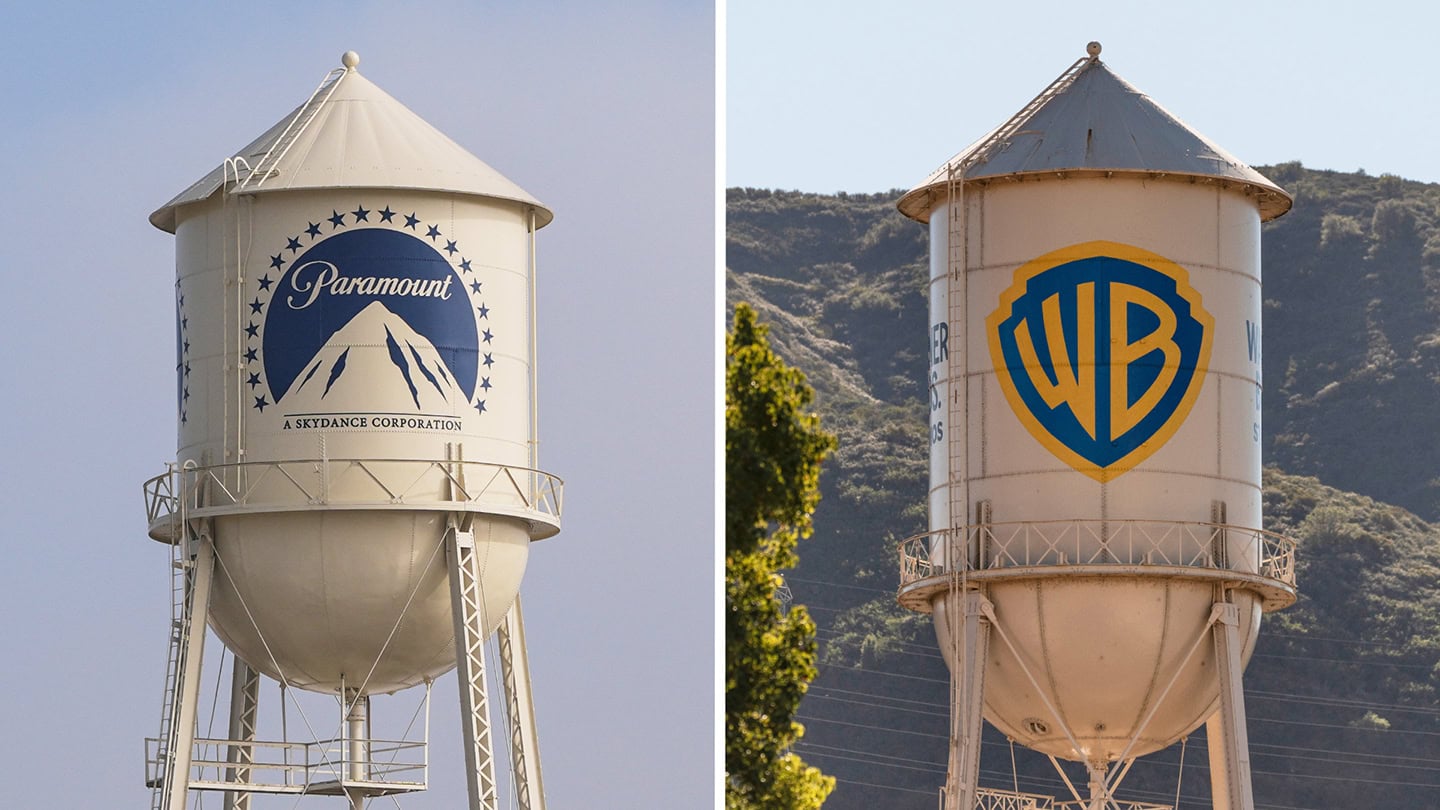
Paramount’s owners were planning to have secured firm control of Hollywood rival Warner Bros. Discovery by the end of this week in a blockbuster deal that has the blessing of President Trump’s Justice Department.
A federal judge has instead ground the process to a halt, at least for now. And her ruling Monday in response to a lawsuit filed by a dozen states suggests Paramount may have some tough sledding ahead in order to get the deal through.
In the ruling, U.S. District Judge Araceli Martínez-Olguín granted a 14-day temporary restraining order to pause the acquisition. The Democratic attorneys general allege Paramount’s purchase of Warner Bros. would reduce competition, hurting filmgoers along with TV and news consumers and especially those who create the entertainment and other content they rely on.
The $111 billion deal would put under the same corporate roof Paramount and Warner’s movie and television studios, streamers Paramount+ and HBO Max, the nation’s most-watched broadcast outlet in Paramount’s CBS, 50 cable TV channels, not to mention both CBS News and CNN.
“This is a critical first win in our case to ensure this megamerger never sees the light of day,” California Attorney General Rob Bonta said in a statement issued to the press.
“History tells the tale of what happens when a few people have great power over markets that are central to Americans’ lives: fewer opportunities for more people, worse products and services for all people,” said Bonta, who has taken the lead on the case for the states. “With our lawsuit, we’re fighting for a free and fair market and a thriving film and television industry that serves creatives and audiences alike.”
The legal challenge focuses on three markets: theatrical movie releases; blockbuster films; and cable television channels.
Paramount did not offer immediate comment.
In an episode of the Hollywood-industry podcast The Town released Monday hours before the ruling, Paramount Chief Legal Officer Makan Delrahim seemed to concede a temporary restraining order was in the cards.
But he fought back against Bonta’s claims that the consolidation would hurt consumers or producers. “You have to stick your head in the sand” to vast changes in consumer behavior in order to swallow the states’ arguments, Delrahim said.
Paramount contends in its public statements and legal filings that competition in entertainment plays out not among simply the five traditional Hollywood studios, but also tech giants Netflix, Apple and Amazon.
Those much bigger companies have drawn significant streaming audiences and have their own blockbuster hits. So, on occasion, have much smaller production houses, such as A24 and Lionsgate. Amazon also owns film studio MGM, which produced the hit Project Hail Mary. The Michael Jackson biopic, from Lionsgate, sold an estimated $1 billion in tickets globally.
The states’ suit does not address the merger of streaming assets, in a sense seeking to sidestep the entry of the digital giants into the entertainment fray.
In her ruling, Judge Martínez-Olguín focused solely on the merger’s consolidation of two of the remaining five major Hollywood studios, effectively as a test case for the states’ other claims of antitrust behavior.
She found the states’ case convincing, at least at first blush.
“Plaintiffs present compelling evidence that the combined firm resulting from the transaction will possess substantial market share in the wide-release theatrical distribution market,” the judge wrote. “On this combined firm market share alone, the Court is persuaded that it can presume the proposed merger is likely to violate antitrust laws.”
Martínez-Olguín also wrote that she did not consider the counter-argument made by Paramount, invoking the arrival of the huge digital competitors, to be persuasive. In a footnote, she characterized the streaming market to be “ancillary” to the markets relevant to the litigation.
The states are also asking the judge to issue a preliminary injunction which could freeze the deal indefinitely, as the larger antitrust case plays out in court.
Paramount had hoped to complete the deal by Wednesday, July 22.
A much longer delay would have huge financial costs for Paramount. Starting Oct. 1, Paramount has to pay Warner shareholders a “ticking consideration” of roughly $650 million for every 90 days the deal is set back. If the deal is not consummated by June 4, Paramount will have to pay Warner $7 billion.
Martínez-Olguín proposed a schedule that would have a full hearing on the preliminary injunction on August 3.
The proposed deal has gotten a lot of scrutiny outside Hollywood for the relationship between Paramount’s controlling family and President Trump — especially because two major newsrooms would be under their control.
The deal is largely bankrolled by Oracle co-founder Larry Ellison, the father of Paramount CEO David Ellison, and a close ally of Trump. Trump has long accused CNN of being “fake news” and publicly mused about what he’d like to do to the cable news giant.
While the U.S. Department of Justice’s antitrust regulators have signed off on the deal — Paramount’s Delrahim used to run that division during Trump’s first term in office — the Federal Communications Commission has not yet given its approval. The FCC’s approval is needed because Paramount holds licenses granted by the agency to use the public airwaves for 28 local television stations. The merger anticipates a huge jump in foreign ownership of the new combined company. About 49% of the new Paramount-Warner would be held by Middle Eastern sovereign wealth funds in non-voting shares.
Source: npr.org