



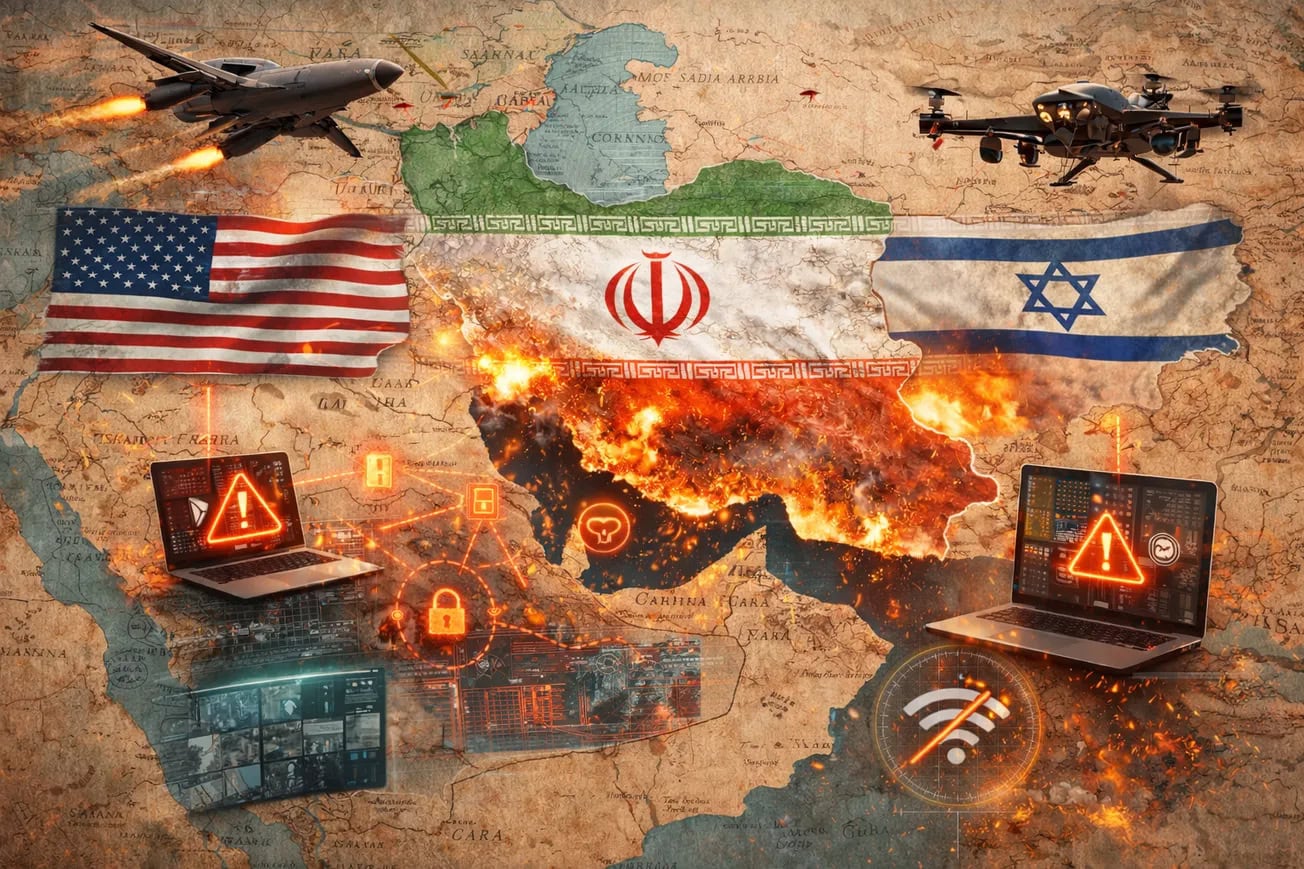
More than 1,045 people have died in Iran as a result of attacks carried out by the United States and Israel since the beginning of the military escalation in the country. The number was released by the semi-official Iranian agency Tasnim, while the conflict entered its fifth day on Wednesday (4) with bombings in several Iranian cities and retaliations launched by Tehran, reports Al Jazeera.
Explosions were reported in several locations in the capital, Tehran, according to Iranian media reports and images shown on state television, which showed the rubble of a building hit in the city center. In addition to the capital, the attacks also reached the holy city of Qom and other urban areas of the country.
The military offensive continues to expand. Al Jazeera journalist Mohamed Vall reported that Israel has classified the most recent operations as “the tenth wave of attacks against Iran.” According to him, in addition to Tehran, other cities have also been hit. “Tehran has been the center of this, but also Karaj and Isfahan, both east and west of the capital,” he stated. Vall added that five people died in one of the bombings and that there are reports of schools being hit.
The International Atomic Energy Agency (IAEA) reported that visible damage was identified in two buildings near the Isfahan nuclear complex. Despite this, the agency stressed that there was no impact on the facilities storing nuclear material and that there is no immediate risk of radiological release.
Russia also expressed concern about the military escalation. The country’s Foreign Ministry warned that the Bushehr nuclear power plant may be at risk due to bombings carried out by the United States and Israel. According to Moscow, explosions were heard a few kilometers from the perimeter of the nuclear facility.
While Iranian territory suffers continuous air attacks, Israel has also gone on alert in response to Tehran’s military attack. Sirens were activated in several cities after Iranian missiles were launched, leading residents to seek shelter while defense systems attempted to intercept the projectiles.
A refugee alert has been issued for Jerusalem, Tel Aviv, and other areas. The Israeli emergency service Magen David Adom reported that it has not yet received any reports of casualties as a result of these attacks.
Al Jazeera journalist Nida Ibrahim reported hearing explosions in the Ramallah region of the West Bank. “From where we are now in Ramallah, we heard very loud explosions, and they could be the result of interceptions,” she stated.
According to her, the Iranian offensive appears to have been extensive, which could hinder the performance of Israeli air defense systems. Ibrahim also cited local press reports about shrapnel hitting the Beit Shemesh area. “According to Israeli media, there was shrapnel from interceptors that fell in the Beit Shemesh area, the city near west Jerusalem, where shrapnel, or a missile, fell two days ago and killed nine Israelis,” she said.
The Israeli army also reported that an earlier Iranian missile launch had been detected hours before.
Tehran continues retaliatory attacks with missiles and drones against Israel and also in areas of the Gulf. The President of the United States, Donald Trump, stated that the confrontation could last for up to a month.
New explosions were reported in Tehran on Wednesday. The Israeli army stated that it carried out a series of bombings in the Iranian capital with the aim of targeting structures linked to the country’s security forces.
According to the Israeli military, the attacks targeted buildings associated with the Basij militia, a volunteer force linked to Iran’s Revolutionary Guard Corps (IRGC), as well as facilities related to the internal security command.
Reporter Tohid Asadi, who is covering the situation in the Iranian capital, stated that high-intensity explosions were heard in the city and in other regions of the country. “We have also received reports of explosions in different cities, including Karaj and Isfahan,” he declared.
According to him, the Revolutionary Guard announced the entry of ground forces into military operations. “They said that ground forces entered into operations on the battlefield in which 230 drones were mobilized,” he stated.
Asadi added that Iranian authorities also mentioned a naval action against US military vessels. “They also spoke about a naval operation targeting US military ships,” he said.
The journalist reported that there are no signs of a reduction in tension. “In Tehran, I see no sign of de-escalation, and escalation is the name of the game,” he stated.
In the diplomatic arena, the prospects for a ceasefire remain distant. Iran’s Foreign Minister, Abbas Araghchi, harshly criticized US President Donald Trump, accusing him of abandoning the diplomatic path.
“He betrayed diplomacy and the Americans who elected him,” Araghchi declared in a post on the social network X.
The Iranian foreign minister also criticized the handling of the nuclear negotiations. “When complex nuclear negotiations are treated like a real estate transaction, and when big lies obscure the reality, unrealistic expectations can never be met,” he stated.
Araghchi concluded by blaming Washington’s stance for the military escalation. “The result? Bombarding the negotiating table out of spite.”
Source: brasil247.com