



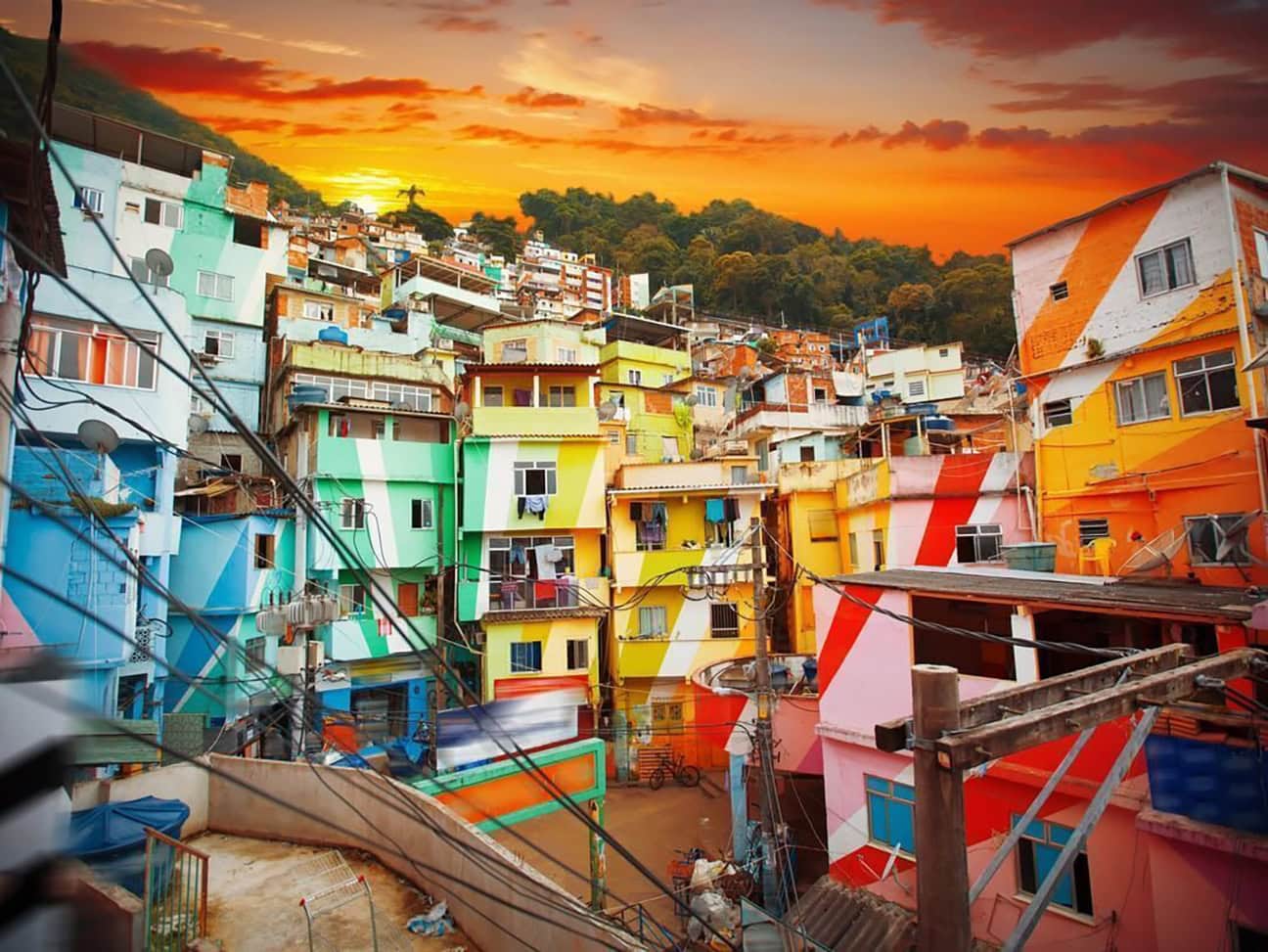
Brazil’s favelas have emerged as an unusual tourist destination. While the country has long been known for iconic attractions, for many visitors and locals, favelas now represent not only a different side of the city, but also a deeper understanding of Brazil’s social and cultural realities.
As travellers increasingly seek offbeat and immersive experiences, alternative tourism has gained momentum worldwide. From dark tourism to sustainable travel, tourists are moving beyond traditional attractions, especially as many popular destinations grapple with overtourism.
Amid this shift, Brazil’s favelas have emerged as an unusual tourist destination. While the country has long been known for iconic attractions, many visitors are now exploring favelas to better understand their history, culture and everyday life.
What are favelas?
Favelas are informal urban settlements that developed without official planning or government oversight, typically on the outskirts or hillsides of major Brazilian cities such as Rio de Janeiro and São Paulo.
Scholars trace the origins of Rio’s favelas to the late nineteenth century, when Brazil was transitioning from an empire to a republic. Initially, they emerged as settlements built by internal migrants and labourers seeking work and affordable housing in rapidly growing cities.
The return of democracy in the 1980s brought new challenges. As Brazil became a major hub in the international drug trade, many favelas found themselves caught between gang violence and harsh police crackdowns.
For decades, Rio’s favelas remained globally associated with poverty, crime and insecurity.
That image, however, has begun to change in recent years.
The introduction of the Pacifying Police Units program by the government in 2008, in order to rid the favelas of these ordeals gradually gave rise destigmatisation and tourism influx.
According to the BBC, due the pacification efforts of the police, “by 2024, official data showed that more international travellers visited Vidigal and Rocinha (the country’s largest favela) than Rio’s famous Christ the Redeemer statue and the Selarón Steps.”
The growing curiosity surrounding these neighbourhoods has also been amplified by celebrities and social media. BBC reported that Spanish singer Rosalía and English footballer Jesse Lingard were recently spotted exploring Rio’s favelas.
Drone videos filmed from favela rooftops have also gone viral online, showcasing panoramic city views. These videos have contributed significantly to reshaping public perceptions and attracting younger travellers searching for unconventional experiences.
Tourists seeking ‘authentic’ Rio
Experts say the rise of favela tourism reflects a broader shift in global travel trends, where tourists increasingly seek experiences that feel authentic and socially immersive rather than limited to traditional sightseeing.
Speaking to the Associated Press, Caroline Martins de Melo Bottino, a professor in the tourism department at Rio de Janeiro State University, said: “People understand that Rio’s favelas meet these expectations really well.”
Similarly, Portuguese visitor Isabel Fernandes told BBC: “I wanted to visit because I enjoy getting to know realities beyond the surface… Not out of ‘tourist’ curiosity, but because I believe that each place has its own stories, people, strength, difficulties and beauty.”
For many visitors, the appeal lies in experiencing local culture more directly, through music, food, art, community projects and conversations with residents.
Speaking to the BBC, Hugo Oliveira, a researcher, guide and director of an education centre in Morro da Providência, said: “If you want to talk about Brazil without knowing the favela, you can’t.”
Tourism becomes a source of livelihood
The tourism boom has also created economic opportunities for local residents.
According to the Associated Press, Vitor Oliveira, formerly a motorcycle taxi driver in Rocinha, began offering tours after noticing a rise in international visitors. Tourism has since become his primary source of income.
Many favela tours today are organised by local guides who aim to present their communities beyond stereotypes of violence and poverty.
Describing a tour led by local resident Thiago Firmino in Santa Marta favela, The Guardian noted, “Tours like Thiago’s offer a glimpse of another side of Brazilian life. But tourists should be aware that these are tours of places where very poor people live – which some might find difficult.”
The report added that local guides are often better positioned to explain the realities of the community without romanticising or overlooking its challenges.
Travel writer Kassia Byrnes, reflecting on her visit to Vidigal as cited in International Traveller, noted that “the people are welcoming, the nightlife is pumping, the hikes are challenging but incredible and riding on the back of a motorbike as you wind your way up the incredibly steep and narrow streets is a memory you’ll keep forever.
The debate around poverty tourism
Despite the growing popularity of favela tours, concerns remain over “poverty tourism” and the risk of romanticising impoverished conditions.
Critics argue that some tours can reduce deeply unequal communities into spectacles for outsiders. Others, however, believe responsibly managed tourism can help destigmatise the favelas, generate employment and integrate these neighbourhoods more fully into Rio’s urban identity.
While safety concerns still persist, the growing tourist influx suggests that travel is increasingly moving beyond postcard attractions. For many visitors, Rio’s favelas now represent not only a different side of the city, but also a deeper understanding of Brazil’s social and cultural realities.
Source: www.firstpost.com